
Two covenants stand out as defining moments in God’s narrative of redemption for His family. The first is a covenant God made with Abraham found in Genesis 15, and sealed by an Divine action called ‘Walking Between The Pieces.‘ The second is a covenant Jesus made with us and is found in Mark 14, and sealed by a Christian sacrament, called The Lord’s Supper.
The sealing of the Covenant made with Abraham found in Genesis 15:9-10, 17-18 instructs Abraham to bring a heifer, a goat, and a ram, each three years old, along with a dove and a young pigeon. Abraham was instructed to kill them, cut them in half the long way, and arrange them in such a way that there would be a path between them, enabling him to walk down and meet people in the middle of the cut-up animals. As darkness fell, Abraham sees a Theophany—a divine manifestation—where God appears as a smoking firepot and a blazing torch and passes between the pieces alone.
In the ancient world, passing between the pieces was a powerful and solemn way of making a contract between two parties. By doing so, they essentially said, “May I be torn apart like these animals if I break this covenant.” However, when only one person passes through the pieces, it tells us that they alone are responsible for fulfilling the covenant. In this instance, God passed through the pieces by himself, signifying that the fulfillment of this covenant rests solely on God alone and not on Abraham. There was nothing Abraham could do that would stop this from being fulfilled.
The final covenant is centered around a NEW covenant that Jesus made with us and sealed by an equally solemn act that is as significant as walking between the pieces was to Abraham. It is where Jesus took the bread and the wine and explained to His disciples that it represented His body and blood, becoming a profound symbol of His sacrifice. These are more than ancient rituals; they are at the heart of the Christian faith, revealing God’s unbreakable promise and His ultimate act of love and devotion. Lois and I would like to take a few minutes to explore these two events and discover how they illuminate God’s relentless pursuit to bring His children home once again.
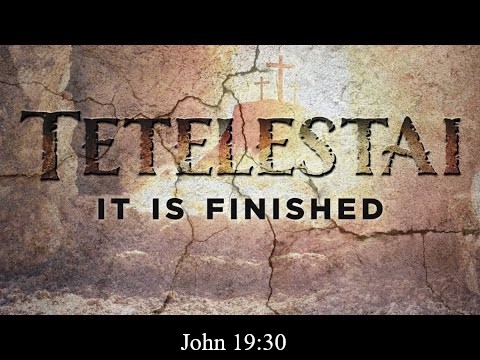
The bread symbolizes Jesus’s body, which would soon be broken on the cross, and is a prophetic act we do each time we take Communion. Just as the animals in the Abrahamic Covenant were sacrificed, so too would Jesus’s body be sacrificed, affirming the establishment of a new and everlasting covenant. The breaking of the bread vividly represents the suffering and sacrifice Jesus would endure for humanity’s redemption. Jesus declared the fulfillment of God’s promises to Abraham with the words, ‘tetelestai‘ meaning, ‘it is finished,’ indicating the completion of God’s plan for man’s redemption. The root word where we get the Greek word tetelestai means “to bring to an end, finish, or complete.” In the Gospel of John, it is finished is also the last words Jesus spoke before He died. In New Testament times, tetelestai was also an accounting term that meant “paid in full.” Jesus takes the cup after supper, saying, “This is the New Covenant in my blood, which is poured out for you.” The wine represents Jesus’s blood, shed for the forgiveness of sins. Just as the blood of the sacrificial animals sealed the covenant with Abraham in Genesis, 15. Jesus’s blood seals the New Covenant. The cup of wine signifies the new, grace-filled relationship between God and humanity, established through Jesus’s ultimate sacrifice.
These moments are far more than ancient rituals; they are at the heart of the Christian faith, illustrating God’s relentless pursuit of His children and His promises to Abraham, culminating with the third promise to bless the world through his seed or offspring. Jesus’s command to “do this in remembrance of me” establishes Communion as a living and continuous reminder of His sacrifice. Every time believers partake in the bread and wine, they do so as a reminder of Jesus’s sacrificial death and the inauguration of the New Covenant, the old made with Abraham, the new made with us. It is a profound moment of reflection and gratitude for the grace extended through His suffering.
‘Tetlestai’ It Is Finished!
Jesus becomes the ultimate sacrificial substitute. His body (the bread) and His blood (the wine) fulfilled the need for sacrifice, ending the old sacrificial system. By dying on the cross, Jesus takes on the punishment we deserve, becoming the perfect and final sacrificial Lamb. Few realize that the chief priest would take a lamb without blemish and sacrifice it on the altar for the people’s sins on the Day of Atonement. When he finished, he would go out to the people and announce ‘it is finished’, meaning their sins were forgiven. When Jesus was dying on the cross, and said ‘It is finished’ He also meant the need to offer a blood sacrifice for the sins of the people was over.
By understanding these connections, the profound significance of these elements becomes real and tangible. The bread and wine are not mere symbols—they are reminders of the deep, sacrificial love of Jesus. Taking Communion is a holy act, inviting us to remember Jesus’s sacrifice and to reaffirm our commitment to live in the light of His redemptive work. It encourages us to examine our hearts, seek forgiveness, and approach the Lord’s Table with reverence and gratitude. The parallels between the Abrahamic Covenant and the Last Supper reveal the seamless narrative of God’s redemptive plan throughout history. Through Jesus, the promises made to Abraham are brought to their fullest expression. Jesus’s sacrificial death fulfills the Old Covenant and inaugurates a new, eternal covenant where God’s grace and mercy are extended to all who believe.
The Eucharist, also known as Communion, is not merely a ritual but a living remembrance of Jesus’s ultimate sacrifice. When we take the bread, we are reminded of Jesus’s body broken for our redemption, fulfilling God’s covenantal promises. When we drink the wine, we recall His precious blood poured out for the forgiveness of our sins, sealing the New Covenant.
In Mark 14:22-24, we read: “While they were eating, He took the bread, said the blessing, broke it in half and passed each half down the table saying, ‘Take it; this is my body broken for you.’ Then He took the cup, gave thanks, and gave it to them, and they all drank from it. He said to them, ‘This is my blood of the covenant, which will be shed for many.’ May each act of breaking bread and sharing the cup become a profoundly significant practice that links us back to the Abrahamic Covenant and forward to the redemption offered through Christ. It is more than historical remembrance; it is a participation in the living reality of God’s enduring grace and commitment to His people.
Communion calls us to reflect, repent, and rejoice. It beckons us to lay down our burdens, embrace forgiveness, and renew our commitment to follow Jesus’s teachings. Recognizing the severe nature of this sacrament, as Paul warns in 1 Corinthians 11:27-30, reminds us to approach it with pure hearts and sincere faith, lest we dishonor the profound sacrifice it commemorates.
The parallels between the Abrahamic Covenant and the Last Supper illustrate the seamless narrative of God’s redemptive plan. Jesus’s sacrificial death fulfills the Old Covenant and inaugurates a new, eternal relationship where God’s grace is abundantly available to all who believe. Through Jesus, the promises made to Abraham are fully realized, offering us an invitation into an intimate and transformative relationship with God.
May this Thanksgiving, be a time when we practice listing the things for which we are thankful for each day. Thanking God for each thing he does and has done on our behalf.
Leave a Reply